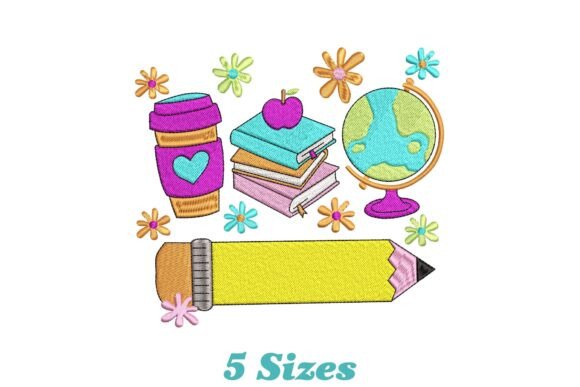
Beautiful Teacher Pencil: A Practical Evaluation
In the realm of machine embroidery, where precision and aesthetic appeal must coexist, finding a design that balances whimsy with technical reliability is often a challenge. The Beautiful Teacher Pencil design emerges as a notable option for those seeking to add a touch of charm to textile projects without compromising on stitch quality. This evaluation examines the design's characteristics, its performance across various substrates, and its practical utility for professionals and hobbyists alike.
Design Concept and Visual Composition
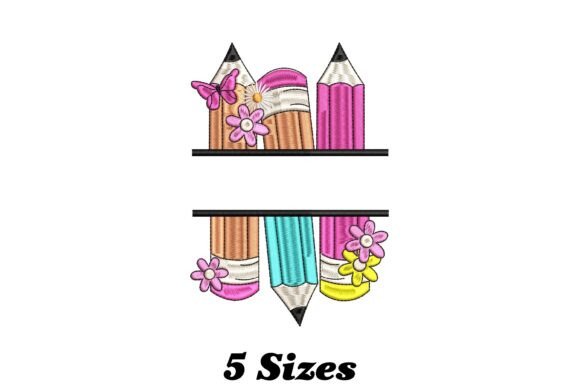
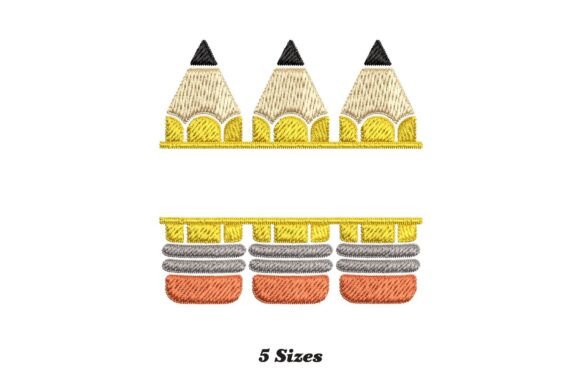
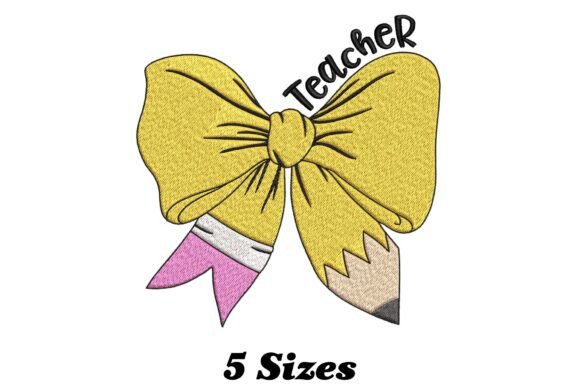
The core appeal of the Beautiful Teacher Pencil lies in its ability to capture a specific nostalgic sentiment through a simple yet effective visual metaphor. The design typically features a stylized pencil, often adorned with playful elements such as stars, hearts, or decorative flourishes, rendered in a way that suggests movement and creativity. Unlike complex, photo-realistic patterns that require extensive thread changes and dense stitching, this design utilizes clean lines and balanced negative space.
From a technical standpoint, the composition is optimized for clarity at smaller scales. This is a critical factor for embroidery, where intricate details can easily become muddy if the stitch count is too high relative to the hoop size. The Beautiful Teacher Pencil maintains legibility even when stitched at approximately 3 to 4 inches in height, making it versatile for placement on garment plackets, towel hems, or tote bag corners. The color palette suggested by the design allows for significant customization; while a classic yellow pencil with a pink eraser is traditional, the vector-based nature of the file permits users to adapt the colors to match specific brand identities or seasonal themes.
Technical Specifications and File Compatibility
A primary consideration for any digital embroidery asset is its compatibility with existing hardware. The Beautiful Teacher Pencil package addresses this by including multiple industry-standard file formats. Whether you are operating a domestic Brother, Janome, or Singer machine, or utilizing an industrial Tajima or Barudan unit, the inclusion of formats such as .PES, .JEF, .DST, .EXP, and .XXX ensures broad accessibility.
This multi-format approach eliminates the need for third-party conversion software, which can sometimes introduce errors in stitch direction or density. When testing the design, the stitch sequences appear logical, minimizing unnecessary trims and jumps. Efficient jump management is essential for reducing production time and preventing thread tangles, particularly when working with lighter fabrics. The design's structure suggests a thoughtful creation process, prioritizing smooth operation over sheer complexity.
Performance Across Different Fabrics
The true test of an embroidery design is how it behaves on different materials. The Beautiful Teacher Pencil demonstrates robust performance across a variety of substrates, though specific stabilization techniques may vary based on the fabric weight.
- T-Shirts and Cotton Blends: On standard cotton tees, the design holds up well with a cutaway stabilizer. The moderate stitch density prevents excessive puckering, allowing the fabric to remain soft to the touch. The playful nature of the motif makes it an excellent choice for teacher appreciation gifts or back-to-school merchandise.
- Towels and Terry Cloth: Embroidery on looped pile fabrics requires careful attention to registration. The clean lines of the pencil design translate effectively here, provided a water-soluble topping is used to prevent loops from catching between stitches. The result is a durable, textured accent that withstands repeated washing.
- Home Decor Items: For items like pillowcases, table runners, or quilts, the design offers a charming focal point. The slightly larger scale possible on these items allows for more elaborate color variations, enhancing the whimsical aesthetic.
It is worth noting that while the design is versatile, very stretchy knits or extremely sheer fabrics may require additional backing support to maintain the integrity of the pencil's shape. However, this is a general rule of thumb for most embroidery designs rather than a specific limitation of this pattern.
Practical Applications and Market Fit
Who benefits most from incorporating the Beautiful Teacher Pencil into their workflow? The primary audience includes small business owners specializing in custom apparel, educators creating classroom rewards, and hobbyists looking to personalize home goods. For entrepreneurs, the design serves as a reliable inventory item for seasonal promotions, particularly around Teacher Appreciation Week or the start of the academic year.
The design's simplicity also makes it suitable for beginners who are still mastering machine tension and hooping techniques. Because the stitch paths are straightforward, troubleshooting is easier compared to highly detailed portraits or landscapes. Furthermore, the "playful" aspect mentioned in its description aligns well with current trends in personalized gifting, where unique, handcrafted touches are valued over mass-produced prints.
In a professional setting, such as a screen printing shop expanding into embroidery, this design offers a low-risk entry point. It requires minimal setup time and has a high success rate, ensuring that client orders are fulfilled efficiently. The ability to customize the text or accompanying elements (if included in the full package) adds another layer of value, allowing for monogramming or the addition of school names.
Evaluation of Long-Term Value and Usability
When assessing the long-term value of a digital embroidery design, one must consider its versatility and durability. The Beautiful Teacher Pencil avoids fleeting fads by relying on a timeless icon—the pencil—associated universally with learning and creativity. This ensures that the design remains relevant year after year, unlike trend-specific motifs that may lose appeal quickly.
Reliability is another key metric. Inconsistent designs often lead to wasted thread, damaged hoops, and frustrated customers. The consistent stitch density and logical sequencing of this pattern suggest a high level of quality control during its creation. Users can expect a predictable outcome, which is crucial for maintaining a professional reputation. Additionally, the availability of multiple file formats future-proofs the asset, ensuring it remains usable even as technology evolves or as users upgrade their machinery.
However, potential limitations should be acknowledged. As with any single-motif design, it may not suit every project. Clients seeking large, all-over patterns or highly realistic imagery will find this design too modest. It is best utilized as an accent piece or a standalone logo rather than a dominant feature on large garments. Understanding these boundaries helps users deploy the design effectively within their broader portfolio.
Conclusion
The Beautiful Teacher Pencil stands out as a functional and aesthetically pleasing resource for machine embroidery enthusiasts and professionals. Its combination of clear visual communication, technical reliability, and broad file compatibility makes it a practical addition to any digital library. By offering a design that is both easy to execute and visually engaging, it bridges the gap between technical execution and creative expression. For those aiming to bring a bit of charm to their fabrics with a reliable, whimsical touch, this design represents a sound investment of time and resources.